Dogs That Can’t Swim
Breeds to watch in and around water
Every dog breed has their strength and weakness. We enjoy the great outdoors in Australia and with our warm climate, we spend many summer days by the pool, river or the beach. As a result, it’s important Australians are aware if their pets are not necessarily suited to water so they can be monitored closely.
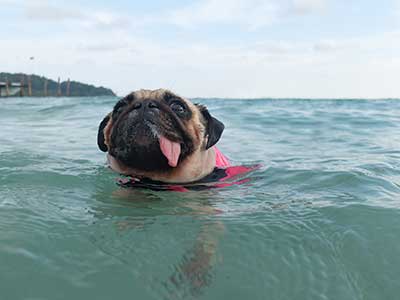 Brachycephalic dog breeds are a concern in the Australian summer. They have difficulty cooling themselves because of their short ‘flat face’ noses. Unfortunately, these poor fur-babies may also have difficulty in and around water which is important to note. This breed includes (among others) the Bulldog, Pug, Shar-Pei, Shih Tzu, Silky Terrier, Cavalier King Charles Spaniel, Boston Terriers, Boxers and Staffys.
These breeds traditionally experience breathing difficulties due to their short muzzle. Further to this is their propensity to aspirate (breathe in) water while they are swimming or running around water. In their excitement, they’re susceptible to breathe water in, which then travels to their lungs causing serious issue. Inhalation of fluid causes obstruction to the air-passages, or fluid on the lungs. This can be a dire situation for pets and their owners.
Symptoms can include, but are not limited to, difficulty breathing or swallowing, coughing, fever, discharge from the nose, increased heart rate, weakness, or unconsciousness.
Some patients will be able to return home for care if their symptoms are mild. Others will need hospitalisation, oxygen therapy which is administered directly into the nasal passages via medical tubing, and the most severe will need hospitalisation with ventilation. In the event of ventilation, we help them breathe while we treat their illness and help strengthen their lungs to perform adequately on their own.
If you have a brachycephalic dog, monitor them closely in and around water to ensure they are not at risk of inhaling the liquid while they play. Calmer waters such as small children’s pools, still lakes or streams are best suited for these breeds. Avoid rough surf at the beach or splashing their face while playing.
In the event you think your pet has inhaled water, especially salt water, seek immediate veterinary attention.

Related Posts

Transporting Your Sick Or Injured Pet

Pet Trauma Symptoms And Advice